
Quiet Creek / Essay 001
The Infrastructure Has an Inner Life
On Jessica Wilson’s work
Instagram · @thequietestcreek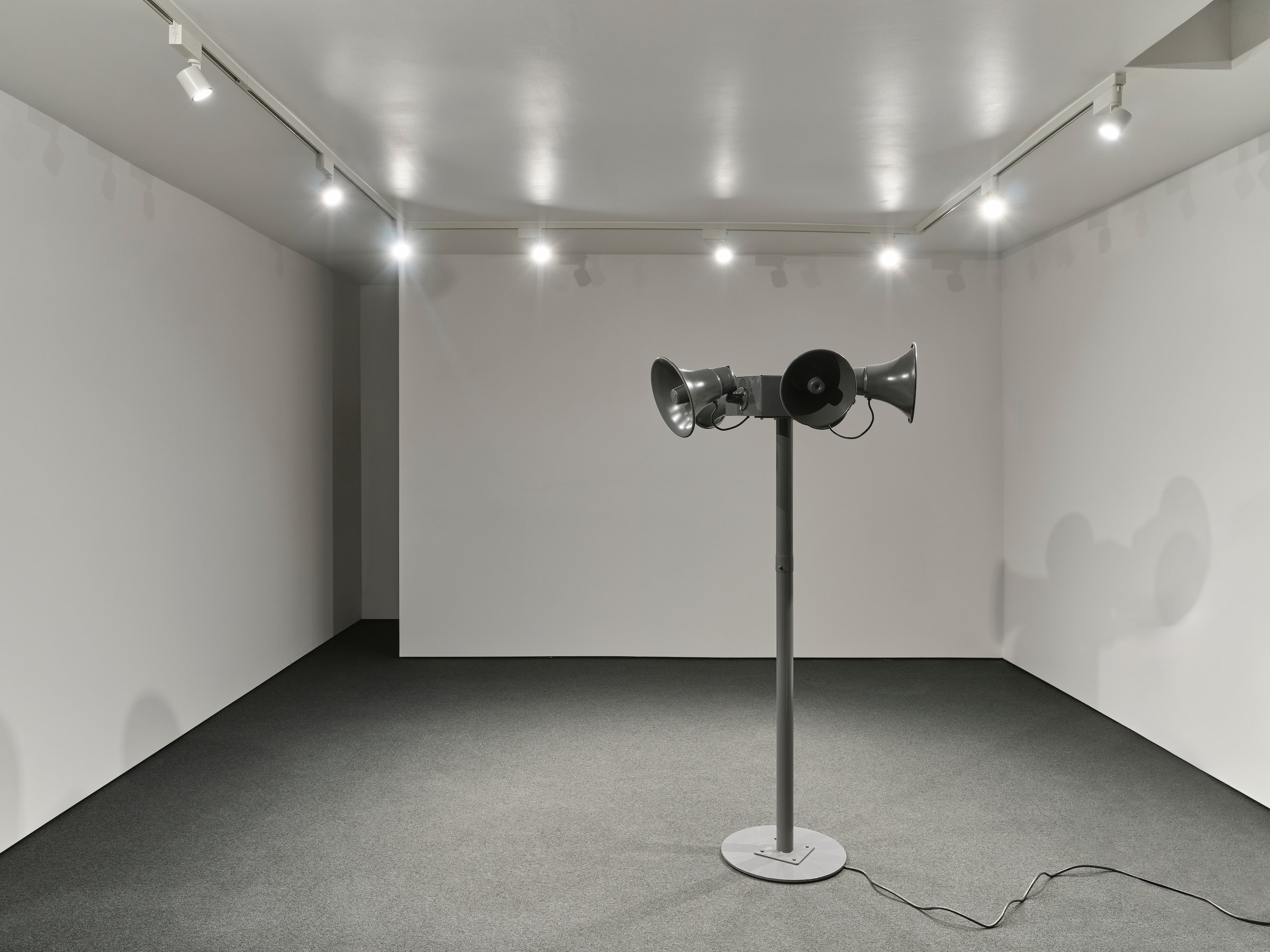
An electrical outlet acquires a disposition. A machine appears uneasy. Infrastructure begins to behave like something with a nervous system.
Jessica Wilson works across computer-generated animation, sculpture, and installation, giving technical systems an awkward emotional presence. Her objects seem anxious, neurotic, imperfect. The systems built to organize everyday life begin to exhibit the instability of the people who live through them.
We read that instability politically.
Anxiety does not arrive without conditions. It takes shape within arrangements of ownership, labor, property, and access. When infrastructure appears distressed, we want to ask what its distress reveals about the system it serves. What is it processing? What does its ordinary functioning require? Whose comfort depends on that functioning, and who absorbs its costs?
Here, we turn toward capitalism and whiteness. We see the psychological effects of those systems surfacing within the privileged conditions they produce. Proximity to power does not place a person outside its emotional consequences. It can make those consequences harder to recognize as structural. A disturbance appears private: my anxiety, my neurosis, my inability to settle. The conditions producing it remain ordinary, ambient, apparently inevitable.
Wilson’s work gives that disturbance an external body. An object can carry the feeling long enough for us to examine it.
Her movement between animation and sculpture matters here. A computer-generated image enters physical space; an everyday object acquires the suggestion of an interior life. The boundary between a technical process and a sensation becomes difficult to hold. We encounter infrastructure as something that acts upon the body, shapes its expectations, and establishes the terms of its surroundings.
We also read this work through the relationship between synthetic infrastructure and nature. Technical systems imitate the living world, then displace and reorganize it. They reproduce movement, responsiveness, circulation, and sensation. Over time, their arrangements become the environment we inhabit.
The imitation carries an assertion of authority. Something living becomes a model, then a function, then a managed experience. Its irregularities are translated into parameters. What can be reproduced becomes easier to own and administer. What resists that translation becomes inconvenient.
We find force in the awkwardness of Wilson’s work. Human inexactitude interrupts the promise that everything can be rendered, optimized, and made to perform. A system develops a tic. An object fails to maintain its composure. Its imagined inner life complicates its assigned use.
There is humor in this, and recognition. We know what it means to keep functioning while feeling otherwise. We recognize the strained relationship between an outward role and an inward disturbance. Wilson allows that relationship to become material without resolving it into a clean explanation.
For us, Siren also prompts a question about who gets to build infrastructure. Work that occupies physical space requires materials, fabrication, space, and maintenance. Access to wealth or institutional backing shapes who can sustain such a practice—and whose ideas acquire the scale, durability, and public presence of the built world.
The ability to give one’s inner life an external form—and have others encounter it—is itself a privilege. We see access to materials, space, money, and institutional support helps determine whose interior world becomes part of the world others inhabit.
This is also a question of the mechanics and manipulation of attention. An inner state becomes a physical encounter that directs what others notice and feel. Scale, placement, and sound can organize that encounter, giving a private sensation public reach. We ask how the resources behind the work become the capacity to shape another person’s attention—and what responsibility accompanies that capacity.
The question of privilege stays inside this encounter. For us, the work becomes more demanding when we consider how a person can benefit from a system while registering its damage. That position carries obligations of attention: to distinguish discomfort from dispossession, to ask whose experience is being made visible, and to examine what remains outside the frame.
Our interest is in the pressure this places on the objects. Their anxiety can open a question about the world that made them. It can also become an absorbing surface, allowing us to remain with a feeling while leaving its conditions untouched. We locate a productive tension between those possibilities.
Wilson’s infrastructure has an inner life. We are interested in what happens when that inner life begins to disclose an outer arrangement: the systems of power, ownership, and substitution that shape what we feel—and what we have learned to accept as our environment.
Back to Quiet Creek